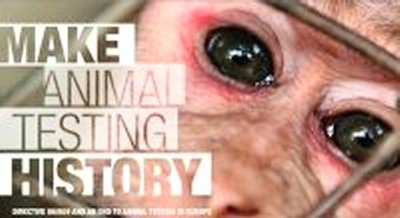
 | Animal Experimentation Animal experimentation or animal testing is defined by biology-online.org as the “use of animals in experiments and development projects usually to determine toxicity, dosing and efficacy of test drugs before proceeding to human clinical trials.” It is a highly controversial subject. The animals involved in testing are put through unnecessary and undeserved pain and suffering; only to produce unreliable, variable, and hard to duplicate results; that do not lead to any real conclusions about the effects on humans. More than 100 million animals are killed in laboratory testing each year(Goodman, Borch, Cherry). The cost of animal testing, measured in either money or lives of animals, usually outweighs the benefits of the experimentation (Willett, Bishop, Sullivan). |
Draize Testing The Draize test is just one example of the unnecessary testing done on animals. The Draize test is an eye and skin irritation test done to determine how the chemicals in products -usually cosmetic or household- will affect our eyes or skin. It is done by immobilizing a rabbit then dropping or smearing a product in one of their eyes or applying it to their exposed skin without the use of any anesthetic. The other eye or unaffected skin is used as a control to observe the reactions of the product. This test can vary between test subjects, and rabbits eyes are anatomically different than humans eyes; which can lead to inaccurate test results. Irritation testing can be done on the skin of human volunteers. Testing on humans provides more accurate results of skin irritation than the testing done on rabbits. There are no laws that require cosmetic or household items be tested on animals. The Food and Drug Association-FDA and Consumer Product Safety Commission-CPSC only require that testing of any kind is done to ensure the product is safe for use by humans, but it does not require the use of animal testing (Product Testing: Toxic & Tragic). |  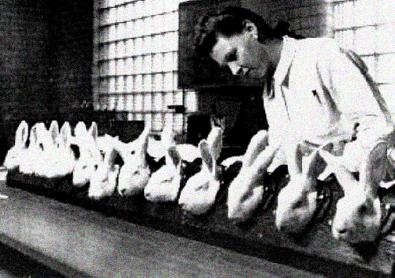 |
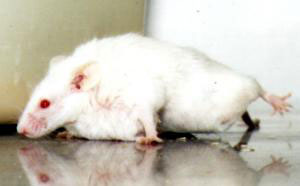 | Cancer Testing Cancer testing is done on animals to determine if a certain product will cause the development of cancer. Animals- usually rats or mice are exposed to toxic chemicals over their lifetime. The test is known to be highly inaccurate, subjective and very expensive. Several other alternative options are available that are more accurate, less expensive and do not require the use of animals (Give the Animals 5). Clinical testing can be done on patients or volunteers who are already diagnosed with cancer or any other naturally occurring disease. Studies can also be done on donated cadavers whom had died from a naturally occurring disease. This alternative could put a stop to artificially inducing and killing animals with cancer and other diseases, for the purpose of experimentation. (Alternatives: Testing without Torture). |
Some Alternatives to Animal Experimentation Some alternatives to animal experimentation are the use of donated bodies or organs, tissues, and cell cultures. Manufactured human skin alternatives or skin from donated cadavers can act as an alternative to skin irritation testing and vaccines can be improved with the use of cell cultures. Computer simulations and mathematic models can be used to predict the toxicity of a molecule before testing it on human volunteers (Alternatives: Testing without Torture). In the Article “Alternatives to Animal Experimentation” by Geoff Watts- Dr. Langley states “If we can move the atoms on a molecule using a beam of laser light I don't see why we can't replace animal experiments. If the full force of the world's scientific brains were turned on this problem there could be enormous strides.” With the technology available putting a stop to animal experimentation is a possibility for the future. |  |
 | Societies Changing View on Animal Experimentation In 1948 one of the first National surveys showed 84% of Americans were in favor of using animals for experimentation. Today surveys suggest that support for animal testing is somewhere between 40-60% and opposition is still rising. Some studies show that education influences support of animal experimentation. People with less than a high school diploma show more opposition than those who have graduated from college. In 2011 65% of people with less than a high school education opposed animal experimentation while only 27% of college graduates opposed; the study suggests that people who are more educated are more likely to rationalize animal experimentation. More women than men oppose animal experimentation. People 65 and over are more likely to support animal experimentation while almost 60% of teens and young adults oppose it (Goodman, Borch, Cherry). The study shows society has changing view towards animal experimentation. With new developments in science and technology, along with the rising opposition from society; a future free of animal experimentation is on its way. |
References
-“Alternatives: Testing Without Torture.” Animals Used for Experimentation Factsheets. PETA. n. d. Web. 25 Oct. 2012. <http://www.peta.org/issues/animals-used-for-experimentation/alternatives-testing-without-torture.aspx>.
-"Animal Testing." - Definition from Biology-Online.org. N.p., n.d. Web. 29 Oct. 2012. <http://www.biology-online.org/dictionary/Animal_testing>.
-Foundation for Biomedical Research. "Animal Experimentation Is Vital for Medical Research." Proud Achievements of Animal Research. Washington, DC: Foundation for Biomedical Research, 2008. Rpt. in Animal Experimentation. Ed. Cindy Mur. San Diego: Greenhaven Press, 2004. At Issue. Gale Opposing Viewpoints In Context. Web. 25 Oct. 2012.
-"Give the Animals 5." Mediapeta.com. PETA, n.d. Web. 29 Oct. 2012. <http://www.mediapeta.com/peta/pdf/GTAfactsheets.pdf>.
-Goodman, Justin R., Casey A. Borch, and Elizabeth Cherry. "Mounting Opposition to Vivisection." Mounting Opposition to Vivisection. Sage Publications, 18 May 2012. Web. 25 Oct. 2012. <http://ctx.sagepub.com/content/11/2/68.full.pdf html>.
-"Product Testing: Toxic & Tragic." PETA.com. PETA, n.d. Web. 29 Oct. 2012. <http://www.peta.org/issues/Animals-Used-for-Experimentation/product-testing-toxic- tragic.aspx>.
-Watts, G. "Alternatives To Animal Experimentation." BMJ: British Medical Journal (International Edition) 334.7586 (2007): 182-184. CINAHL with Full Text. Web. 25 Oct. 2012.
-Willett Catherine, Patricia Bishop, and Kristie Sullivan. "Reducing EPA’s Animal Testing." AV Magazine. 2012: 22-23. Web. 25 Oct.2012. <http://www.mediapeta.com/peta/PDF/reducing-epas-animal-testing.pdf>.
Photos
-"Animal Testing." Vegan Peace. Wanda Embar, 2008. Web. 25 Oct. 2012. <http://www.veganpeace.com/animal_cruelty/animal_testing.htm>.
-Graphic Anti-animal-testing Billboard Banned. 2012. Photograph. The Australian. Web. 25 Oct. 2012. <http://www.theaustralian.com.au/news/graphic-anti-animal-testing-billboard-banned/story-e6frg6ox-1226315725838>.
-Make Animal Testing History. N.d. Photograph. Reflection on Animal Testing. Blogspot, 26 Sept. 2012. Web. 25 Oct. 2012. <http://kristy2f5.blogspot.com/>.
-“No More Dirty Looks.” Web. 29 Oct. 2012. <http://nomoredirtylooks.com/tag/regulation/>
